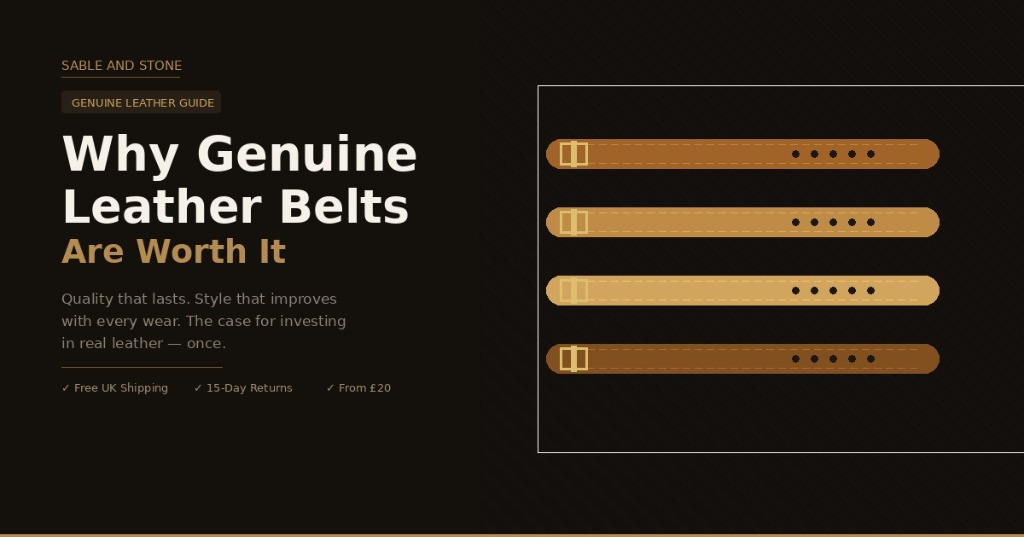
There's a version of getting dressed where everything works quietly together — and the belt is part of that. Not the loudest thing in the outfit, but something that holds it together in more ways than one.
The problem is that most belts don't last. They crack at the holes, peel along the edges, or go stiff after a season. That's not a leather problem. That's a cheap material problem. And once you've experienced what a proper leather belt actually feels like — how it sits, how it ages, how it just works — it's hard to go back.
This article is about why genuine leather belts are one of the few accessories worth spending properly on, regardless of whether you're buying for yourself or as a gift.
What Makes a Belt "Genuine Leather"?
The term gets thrown around a lot, so it's worth being precise. Genuine leather means the belt is made from real animal hide — in most quality cases, cowhide — rather than bonded leather (scraps and fibres glued together) or PU/vegan leather (plastic-based synthetic materials).
Cowhide in particular is a dense, full-bodied hide. It has natural grain, natural variation, and natural strength. When it's used in belt-making, it resists stretching, holds its shape through the buckle loops, and handles daily friction without degrading.
Bonded leather, by contrast, tends to peel and crack within a year of regular use — especially around the buckle holes where stress is highest. PU materials can look convincing at first but behave like plastic: they don't breathe, they don't flex naturally, and they don't age gracefully.
The short version: genuine leather is a material that improves with use. Everything else degrades.
5 Reasons Genuine Leather Belts Are Worth It
1. They Last for Years, Not Seasons
A well-made genuine leather belt worn daily can last five to ten years or more. The leather gradually conforms to your body, softens in the right places, and develops a patina — a natural darkening and lustre that makes it look better with age rather than worse.
Compare that to a bonded or synthetic belt that might start showing wear within six months: peeling at the tip, cracking at the buckle, looking visibly tired after a year. When you factor in replacement cost over time, a genuine leather belt is almost always the more economical choice.
2. They Look Better the Longer You Wear Them
Genuine cowhide leather develops a patina over time. The surface absorbs oils from your hands, adjusts to light and air, and takes on a depth of colour that a new belt simply doesn't have.
This is a quality that synthetic materials cannot replicate. A five-year-old quality leather belt often looks more distinguished than a brand-new bonded leather one — because the material was designed to age rather than simply endure.
3. They Work Across Every Occasion
A good leather belt doesn't need a category. The same belt that works with jeans on a Saturday can sit comfortably with chinos at the office during the week. This versatility is partly about the design — a clean buckle, a classic width — but it's also about the material itself. Leather carries itself with a quiet quality that synthetic alternatives can't match.
For men, a brown leather belt in a classic 35mm width covers everything from smart-casual to business settings. For women, a slim leather belt in tan or black works over a dress, with trousers, or cinched over a coat. The same belt, multiple contexts. That's genuine value.
4. They Make a Genuinely Good Gift
Leather accessories sit in a sweet spot for gifting: personal enough to feel considered, practical enough to be used every day, and quality enough to be noticed. A genuine leather belt from £20–£30 gives you something that doesn't feel like a placeholder gift — it's an item the recipient will reach for regularly.
The material also signals quality without broadcasting price. A well-made leather belt looks expensive whether it cost £20 or £200 — and when it comes from a good maker, it performs like the higher end regardless.
5. They're a More Sustainable Choice
Buying once and keeping it for years is better for the environment than replacing cheap accessories every season. Genuine leather, properly cared for, reduces the cycle of throwaway fashion that fast accessories have enabled. It also means less plastic waste — PU and bonded leather end up as microplastics in landfill far sooner than full-grain hides.
This doesn't mean leather is without environmental considerations, but for those thinking about longevity and consumption, choosing a belt that lasts a decade over one that lasts a year is a meaningful difference.
What to Look For When Buying a Leather Belt
Not all leather belts are equal, even within genuine leather. A few things worth checking:
The hide quality. Full-grain and top-grain cowhide are the strongest and most durable options. They're cut from the top layer of the hide, which retains the natural grain and fibre structure. Split-grain leather is thinner and less durable.
The stitching. On quality belts, stitching is tight, evenly spaced, and uses strong thread. Contrast stitching in particular shows off craftsmanship — look at the Contrast Stitch Leather Belt for a clean example of how stitching adds both structure and style.
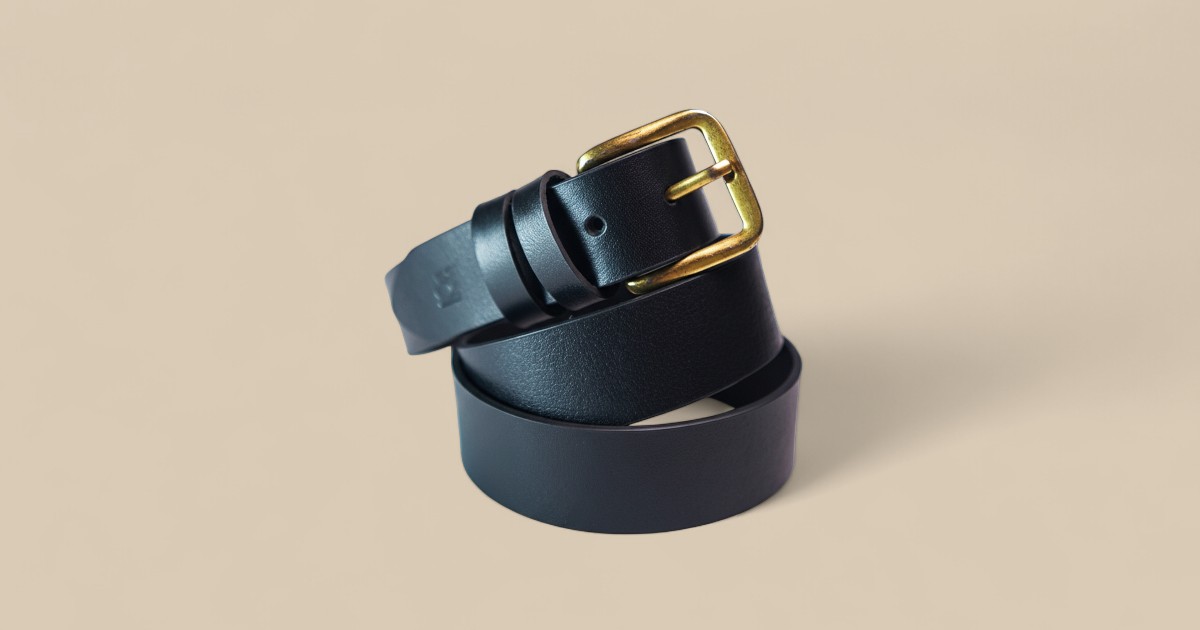
The buckle hardware. Brass and solid steel buckles age well and don't tarnish as quickly as cheap alloy. They also feel substantial — which matters every time you fasten the belt.
The cut. A well-cut belt maintains consistent width all the way through. Cheaper belts sometimes taper unevenly or show rough edges where the hide was cut with less care.
The finish. Run your fingers along the back of the belt. Quality leather feels smooth and even, not papery or rough. The edges should be bevelled or burnished — not simply sliced and left raw.
Men's Leather Belts vs Women's — Different Styles, Same Standard
The case for genuine leather is the same regardless of who's wearing it, but the styles differ in useful ways.
Men's leather belts typically run wider — 35mm is standard for casual and smart-casual, while 30mm works better with formal trousers. Classic colours are brown and black, with brass or silver hardware to match other accessories. The Brown Brass Belt and Dark Brown Leather Belt are good starting points — versatile enough for daily use, distinctive enough to notice.
Women's leather belts tend to run narrower and offer more variety in colour and texture. A tan or burgundy belt adds warmth to neutral outfits; a slim black belt is one of those items that works with almost everything. Browse the Women's Belts collection for styles that sit comfortably between casual and dressed-up.
For those buying as a gift, a classic brown or black with brass hardware is usually the safest choice — and the most appreciated long-term.
How to Look After a Genuine Leather Belt
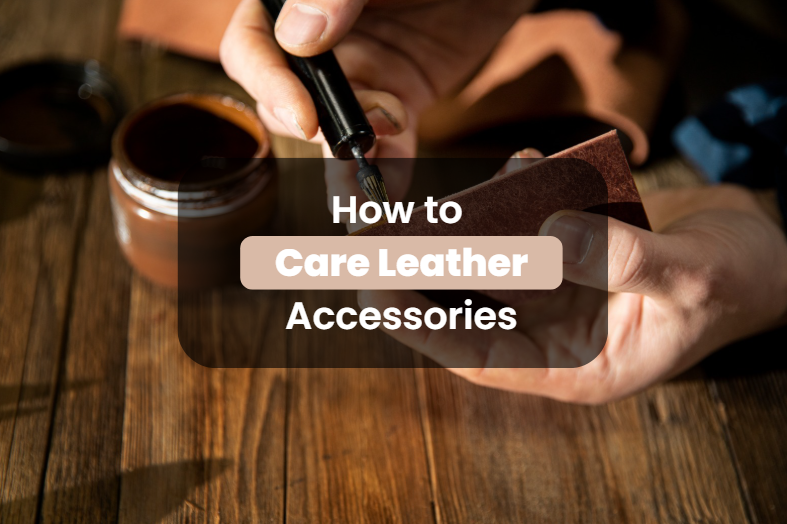
The care required is minimal, which is part of the point. Leather doesn't need constant treatment — in fact, over-conditioning is a common mistake that leaves the surface greasy and soft when it should be firm and structured.
Wipe it down occasionally with a slightly damp cloth to remove surface dust and grime. Let it dry naturally — never with heat.
Condition it once or twice a year with a small amount of leather conditioner or beeswax cream. This keeps the leather from drying out and cracking over time.
Store it flat or rolled loosely, not bent at a sharp angle. Belts kept in a drawer folded over themselves can develop a permanent crease at the fold.
Keep it away from prolonged water exposure. A bit of rain won't harm a leather belt, but leaving it soaked will stain and stiffen the hide. If it gets wet, blot it dry and let it air.
That's genuinely about it. A few minutes of attention once or twice a year keeps a leather belt going for a decade.
The Real Cost of a Cheap Belt
A £6 belt from a fast-fashion retailer isn't a bargain if you replace it every year. Over five years that's £30+ spent on something that never felt quite right and ended up in a bin.
A genuine leather belt at £20–£26 — like the range at Sable and Stone — holds its shape, its finish, and its usefulness across the same period. The per-year cost is lower. The experience is better. And you're not digging through a drawer wondering why nothing sits right.
That's the real argument for genuine leather. Not luxury. Just quality that earns its place.
Shop Leather Belts at Sable and Stone
All belts in the Sable and Stone range are made from genuine cowhide leather and ship free from Huddersfield across the UK. Prices start from £20, with a 15-day return window if the fit or colour isn't quite right.
Free UK shipping on all orders. 15-day returns. Ships from Huddersfield, West Yorkshire.