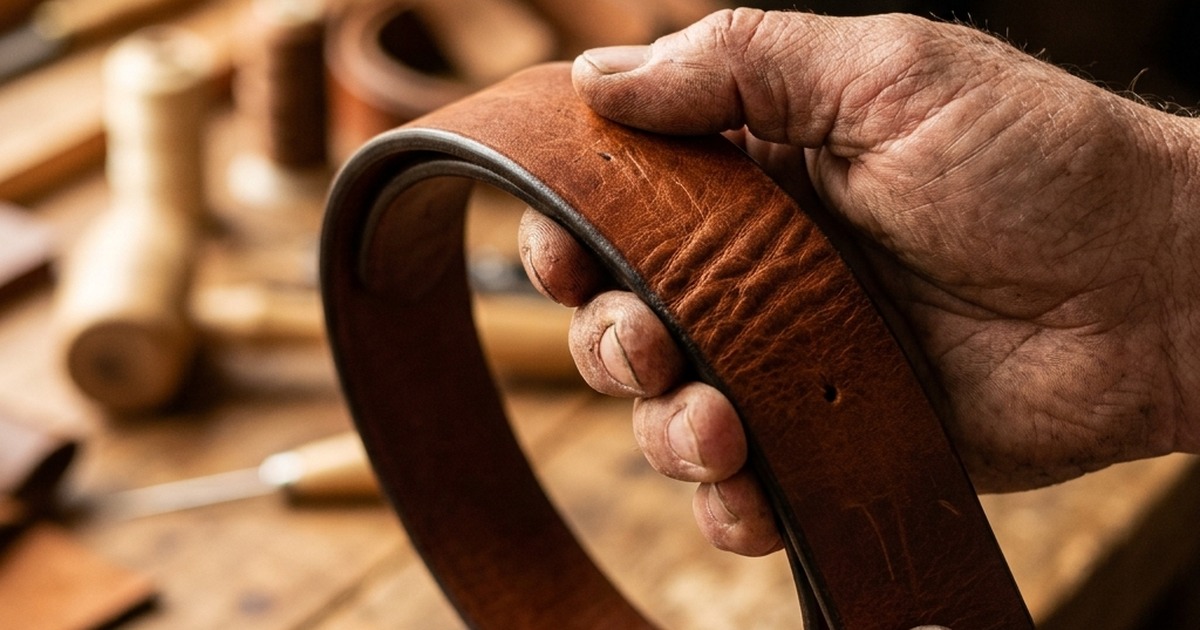
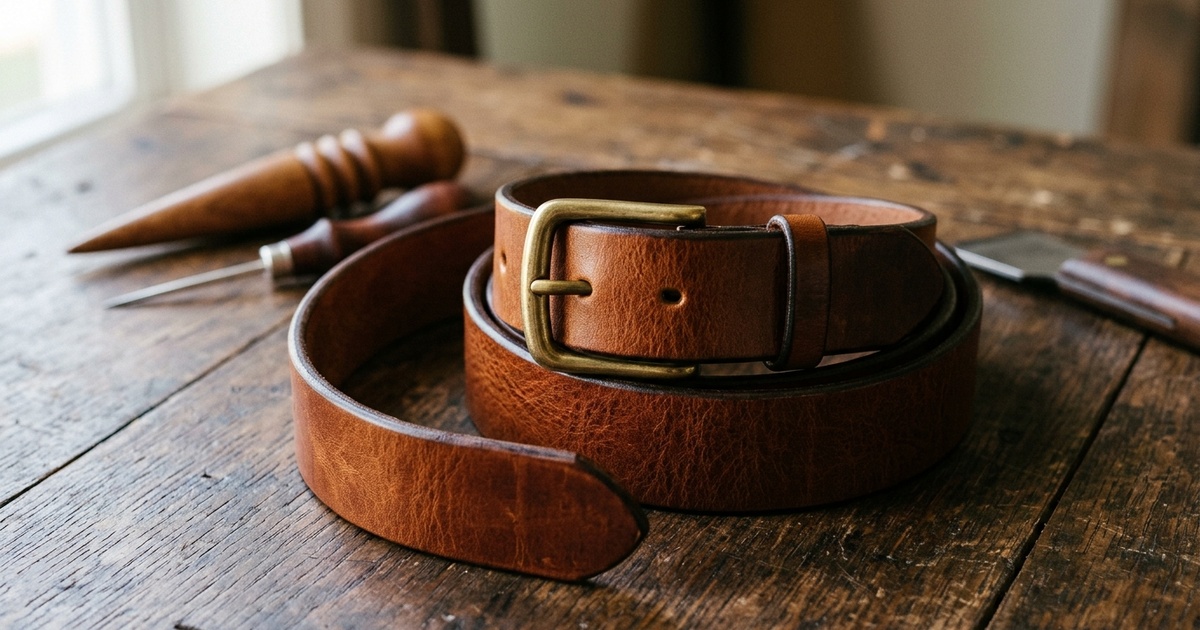
A new leather belt can feel surprisingly firm when you wear it for the first time. A leather wallet may seem stiff when you open it, while a pair of leather shoes might need a little time before they feel comfortable. After weeks or months of use, these same products often feel different. They become more flexible, adjust to regular movement, and develop signs of natural wear.
This raises an interesting question: does real leather stretch over time, or does it simply become softer with use?
The short answer is yes. Real leather can stretch, but the amount depends on its quality, thickness, tanning method, construction, and how frequently you use it. Some leather products gradually become more flexible, while others may expand slightly in areas that experience repeated pressure. However, there is an important difference between natural leather flexibility and permanent stretching.
Understanding this difference can help you make better buying decisions, especially when shopping for genuine leather belts. A belt should provide a comfortable fit while maintaining enough structure to support regular use. If it stretches too much, it may become loose and lose its original shape.
Whether you are buying your first leather accessory or trying to understand why an older belt fits differently, this guide explains everything you need to know about leather stretch, the factors that affect it, and how to maintain your leather products over time.
Does Real Leather Stretch Over Time?
Yes, real leather can stretch over time. Natural leather contains a network of collagen fibers that gives it strength, flexibility, and the ability to respond to pressure and movement.
When leather is used regularly, these fibers can gradually shift and adjust. Repeated bending, tension, body heat, and contact with moisture can affect how the material feels and behaves. As a result, some leather products become softer and may expand slightly in areas that experience frequent pressure.
However, leather does not stretch in the same way as elastic fabric. It does not automatically return to its original shape after every movement, nor does it expand endlessly without affecting its structure.
The amount of leather stretch depends on several factors:
- Leather type: Full-grain, top-grain, and split leather have different structures and properties.
- Thickness: Thicker leather often resists stretching more than thinner leather.
- Tanning method: Vegetable-tanned and chrome-tanned leather can have different levels of firmness and flexibility.
- Frequency of use: Products exposed to regular movement and pressure may gradually change shape.
- Moisture exposure: Water and humidity can affect the flexibility and structure of natural leather.
- Construction: Stitching, backing, reinforcement, and product design can limit or influence stretching.
For example, a leather belt may gradually become more flexible around the waist because it experiences repeated bending and tension. A leather wallet may soften around its folds as it is opened and closed.
These changes are normal to some extent. However, excessive stretching may indicate poor construction, unsuitable leather thickness, or improper care.
Why Does Leather Stretch?
To understand why leather stretches, it helps to look at how natural leather is structured.
Leather is made from animal hide that has been processed through tanning and finishing. Its strength comes largely from collagen fibers arranged in a complex network. These fibers give leather its ability to bend, flex, and withstand everyday use.
Unlike synthetic materials that are manufactured to have specific stretching properties, natural leather retains characteristics from the original hide and the processes used to treat it.
When pressure is applied, the fibers may shift slightly. Repeated movement can gradually change how the material responds to tension.
The Role of Collagen Fibers
Collagen is a natural protein found in animal skin. It forms a network of fibers that provides strength and support.
During leather production, tanning stabilizes this structure and helps prevent the hide from breaking down. However, the fibers still retain a degree of flexibility.
When you bend a leather belt, for example, the material flexes around your body. Repeated movement can gradually soften certain areas, making the belt feel less rigid than it did when new.
If the leather experiences excessive tension, the fibers may become permanently displaced or damaged. This can result in stretching, distortion, or weakened areas.
Pressure and Repeated Movement
Regular use is one of the main reasons leather changes over time.
Consider a belt worn almost every day. It experiences pressure around the waist, bending near the buckle, and repeated tension when it is fastened and removed.
Over time, the leather may become more flexible around these areas.
The same process happens with shoes, bags, and wallets. The material adjusts to repeated movement, although the amount of change varies by product.
Heat and Moisture
Heat and moisture can also affect leather flexibility.
Natural leather can absorb some moisture from its surroundings. When exposed to moisture, its fibers may become more flexible. This can make the material easier to stretch while it is wet.
However, this does not mean that moisture is a safe way to stretch leather.
Excessive water exposure can damage the finish, affect the shape, and weaken the material. High temperatures can also dry out leather and cause it to become stiff or brittle.
For everyday leather care, maintaining a stable environment is better than exposing products to extreme conditions.
Can Leather Stretch Without Losing Its Quality?
Yes, leather can experience some natural stretching without losing its overall quality. A small amount of flexibility and shape adjustment is a normal part of using many natural leather products.
The important factor is whether the material maintains its structure.
Healthy leather flexibility allows a product to bend and move without becoming excessively loose or distorted. For example, a new belt may initially feel firm but gradually become easier to fasten and wear.
This is different from a belt that becomes noticeably longer, develops permanent creases, or starts losing its shape.
Natural Stretching vs. Excessive Stretching
Natural stretching usually happens gradually. The leather becomes more comfortable and flexible as it responds to regular use.
Excessive stretching is different. It may occur when leather is exposed to constant tension, incorrect sizing, unsuitable moisture levels, or poor storage conditions.
Here is how the two compare:
| Natural Leather Flexibility |
Excessive Leather Stretch |
| Develops gradually |
May develop quickly |
| Material becomes easier to bend |
Material may lose its original shape |
| Product generally remains functional |
Product may become loose or distorted |
| Minor changes in fit |
Noticeable changes in size |
| Normal signs of regular use |
May indicate damage or poor construction |
A quality leather product should be flexible enough for its intended purpose while retaining the structure needed for everyday use.
Which Types of Leather Stretch the Most?
Not all leather stretches at the same rate. Different leather grades and manufacturing methods affect how the material responds to pressure.
Understanding these differences is useful when choosing belts, shoes, bags, and other accessories.
1. Full-Grain Leather
Full-grain leather comes from the outer layer of an animal hide. Its natural grain surface remains intact, without sanding away the upper layer to remove imperfections.
It is generally valued for its strength and natural texture.
Full-grain leather can stretch slightly with regular use, but it usually maintains a firm structure when properly manufactured. Its thickness and dense fiber network make it a popular choice for products that need durability.
For genuine leather belts, full-grain leather is often worth considering because it can provide a balance of structure, flexibility, and long-term wear.
It may soften with use and develop a natural patina, but this does not mean it should become excessively loose.
2. Top-Grain Leather
Top-grain leather also comes from the outer portion of the hide. However, its surface is usually sanded or corrected to create a smoother and more uniform appearance.
Depending on its thickness and finish, top-grain leather can be flexible and comfortable.
Some top-grain products may stretch slightly more than comparable full-grain products, but there is no universal rule. The manufacturing process and leather thickness play major roles.
Top-grain leather is commonly used in bags, furniture, shoes, and accessories.
3. Genuine Leather
Genuine leather is a broad commercial term used for products made from real animal hide. It does not identify one specific grade of leather.
Some genuine leather products use lower layers of the hide or undergo additional processing to achieve a particular finish.
Their stretching behavior can vary considerably.
A thick, well-made genuine leather belt may retain its shape better than a thin, poorly constructed full-grain belt. This is why the label alone should not determine your buying decision.
Always check the product specifications and construction details.
4. Split Leather
Split leather comes from the lower layers of the hide after the upper grain layer has been separated.
It is often used for products that require a softer or more affordable material. Some split leather receives a coating or embossed finish to create the appearance of natural grain.
Its strength and stretching behavior depend on the treatment and construction.
Because the structure differs from full-grain leather, split leather may not provide the same level of support in products that experience repeated tension.
5. Suede Leather
Suede is made from the inner surface of a hide or the split portion of leather. It has a soft, textured surface that gives it a different feel from smooth-grain leather.
Suede can be more flexible than some firmer leather types. However, its stretching behavior depends on its thickness, source, and processing.
It is commonly used in footwear, jackets, and fashion accessories.
Suede also needs careful maintenance because its surface can be more sensitive to moisture and stains.
Do Leather Belts Stretch Over Time?
Yes, leather belts can stretch over time, particularly when worn regularly.
A belt experiences repeated tension around the waist. It bends as you sit, stand, walk, and move throughout the day. It also experiences pressure around the buckle and adjustment holes.
These repeated movements can gradually affect the leather.
A new belt may initially feel firm, but after regular use, it can become more flexible. Some expansion may occur, especially if the belt is made from thinner leather or experiences constant tension.
However, a well-made leather belt should not stretch excessively under normal use.
Why Leather Belts Become Longer
There are several reasons a leather belt may become longer over time.
- Repeated tension: When a belt is fastened, it experiences continuous pulling force. Over months or years, this pressure may cause slight expansion.
- Leather thickness: Thinner leather may be more likely to change shape under repeated tension than thicker leather of comparable quality.
- Material quality: Different leather grades and processing methods affect the strength and stability of the material.
- Moisture exposure: Excessive moisture can make leather more flexible and increase the risk of stretching when tension is applied.
- Construction quality: A belt made with weak backing, poor stitching, or unsuitable materials may lose its shape more quickly.
How Much Do Leather Belts Stretch?
There is no fixed measurement that applies to every leather belt.
Some belts experience very little permanent change, while others may gradually become longer or looser after extended use.
The amount depends on the leather grade, thickness, construction, wearing habits, and maintenance.
It is important not to assume that every leather belt will stretch by a specific number of inches or centimetres. Manufacturers may use different materials and construction techniques, so results can vary.
If a belt becomes noticeably loose after a short period, check whether it was the correct size to begin with and whether the material is suitable for regular use.
Do Genuine Leather Belts Stretch More Than Other Belts?
Genuine leather belts can stretch, but their behavior depends on the type of leather used.
A belt made from thick, well-constructed full-grain leather may retain its shape better than a thin belt made from lower-grade leather.
Synthetic belts may also change shape, crack, or lose their structure, depending on their material and quality.
Rather than comparing products based only on whether they are labeled genuine leather, look at their construction and material specifications.
What Factors Affect Leather Stretch?
Several factors determine how much leather stretches. Understanding them can help you select suitable products and avoid unnecessary wear.
1. Leather Thickness
Thickness is one of the most important factors.
Thicker leather generally provides more resistance to stretching because it contains more material and offers greater structural support.
This is one reason thicker cowhide is commonly used for belts and other products that need to maintain their shape.
However, thicker does not always mean better. A belt that is too thick may feel uncomfortable or fail to fit properly through certain belt loops.
The ideal thickness depends on the product's design and intended use.
2. Tanning Method
The tanning process changes the characteristics of leather.
Two common methods are vegetable tanning and chrome tanning.
Vegetable-Tanned Leather
Vegetable tanning uses natural tannins derived from plant materials such as bark and leaves.
This process often produces leather with a firmer feel and a traditional appearance.
Vegetable-tanned leather is frequently used for belts, saddlery, wallets, and other accessories that benefit from a more structured material.
It may soften and develop a patina with use. However, its resistance to stretching still depends on the thickness and quality of the hide.
Chrome-Tanned Leather
Chrome tanning uses chromium-based tanning agents to process the hide.
This method often produces leather that is softer and more flexible than many vegetable-tanned alternatives.
Chrome-tanned leather is commonly used for clothing, upholstery, shoes, and bags.
Its stretching behavior varies according to the tanning conditions, finishing process, and product construction.
3. Frequency of Use
A leather product used every day may experience more wear than one used occasionally.
For example, a daily-use belt experiences repeated tension and bending. A belt worn only for special occasions may take much longer to show similar changes.
Frequent use does not automatically mean a product will stretch excessively. It simply increases the number of times the material is exposed to movement and pressure.
4. Moisture and Humidity
Leather naturally responds to moisture.
High humidity can affect the moisture content of the material, while direct water exposure may temporarily increase flexibility.
When leather is stretched while wet, it may retain some of the altered shape after drying.
This is why soaking a leather belt or trying to stretch it with water is not recommended.
Keep leather products dry and follow the manufacturer's care instructions.
5. Storage Conditions
How you store leather also affects its condition.
Leaving a belt tightly stretched around an object or storing it under heavy pressure for long periods may affect its shape.
Excessive heat and direct sunlight can dry out leather, while damp storage conditions may encourage mould growth.
Store leather accessories in a cool, dry location where they can maintain their natural shape.
6. Leather Construction
The construction of a leather product can influence how much it stretches.
For example, a belt made from a single thick piece of leather may behave differently from one made with multiple layers.
Some belts include backing materials or reinforcement that help maintain their structure.
Stitching and edge construction can also affect how a product handles repeated movement.
For buyers, this means the quality of craftsmanship matters just as much as the leather itself.
Does Leather Stretch or Does It Just Become Softer?
This is one of the most common questions people have about natural leather.
The answer is that both changes can happen, but they are not the same.
When leather becomes softer, it is generally easier to bend and move. This may happen as the material responds to repeated use and its structure becomes more flexible.
Stretching involves a change in dimensions. The leather may become longer, wider, or looser in a particular area.
A belt that feels more comfortable after several weeks may have softened without experiencing significant permanent stretching.
How to Tell the Difference
Look at the product's original shape and compare it with its current condition.
If a belt bends more easily but still fits the same way, it has probably softened.
If the belt now needs a tighter adjustment hole to achieve the same fit, it may have stretched or changed shape.
Other signs include:
- Increased looseness around the waist.
- A noticeable change in the distance between the buckle and adjustment holes.
- Areas that appear thinner or more compressed.
- Permanent creases around high-pressure sections.
- Changes in the belt's overall length or shape.
Some surface creases are normal. However, major distortion or thinning may indicate excessive wear.
Can You Stretch Leather on Purpose?
Yes, natural leather can be stretched, but doing so requires care.
Some people want to stretch leather shoes, gloves, or accessories because they feel too tight. Others may want to adjust a leather item for a better fit.
However, stretching is not always the right solution.
If leather is forced beyond its natural flexibility, it may lose its shape or become permanently damaged.
For expensive or valuable leather products, professional assistance is usually the safer option.
Why You Should Avoid Forcing Leather to Stretch
Natural leather has limits.
Applying too much force can damage the collagen fiber structure, weaken stitching, or create uneven areas.
For example, forcing a leather belt to stretch may cause it to become longer without improving its overall fit.
Likewise, using excessive moisture or heat can affect the leather's finish and condition.
If a leather accessory feels uncomfortable, check whether the size and design are appropriate before attempting to change its dimensions.
Does Leather Return to Its Original Shape?
Sometimes leather can recover partially after temporary pressure, but permanent stretching does not always reverse itself.
This depends on how much the material has changed and whether its internal structure has been damaged.
A slight temporary indentation may disappear after the pressure is removed.
However, leather that has been stretched significantly may remain distorted.
This is another reason to avoid applying unnecessary force to leather accessories.
How to Prevent Excessive Leather Stretch
A little flexibility is normal, but excessive stretching can affect the fit and appearance of leather products.
The good news is that simple care habits can help reduce unnecessary wear.
Choose the Correct Size
Buying the right size is one of the easiest ways to prevent excessive stretching.
A leather belt that is too short may experience unnecessary tension. A belt that is too long may require repeated adjustment or awkward fastening.
Check the manufacturer's sizing guide before purchasing.
For belts, remember that the size listed by a manufacturer may refer to the waist measurement, the distance from the buckle to the middle hole, or the total belt length.
These measurements are not always the same.
Avoid Excessive Tightening
A belt should hold your clothing comfortably without being pulled too tightly.
Constantly tightening a belt beyond what is necessary places additional tension on the leather and the buckle attachment.
Choose a comfortable fit that allows normal movement.
Keep Leather Away From Excessive Water
Water can temporarily increase leather flexibility, making it more vulnerable to stretching under pressure.
Avoid wearing leather accessories in situations where they are likely to become soaked.
If your belt gets wet, wipe away excess moisture and allow it to dry naturally.
Condition Leather When Necessary
Leather conditioning can help maintain flexibility and prevent excessive dryness.
However, using too much conditioner or applying unsuitable products may affect the leather's surface.
Use a conditioner designed for the particular leather finish and follow the manufacturer's recommendations.
Conditioning is about maintaining the material, not making it stretch.
Store Belts Properly
When you are not wearing a leather belt, store it in a way that does not place unnecessary tension on the material.
You can hang it loosely or roll it gently without creating sharp folds.
Avoid placing heavy items on top of leather accessories.
Proper storage helps maintain the belt's shape between uses.
How to Choose Genuine Belts That Hold Their Shape
If you want a belt that remains comfortable and retains its structure, choosing the right product is important.
A genuine leather label alone does not guarantee that a belt will resist stretching.
You should examine the material, thickness, construction, and finishing before making a purchase.
1. Look for Clear Leather Grade Information
Check whether the manufacturer identifies the leather as full-grain, top-grain, or split leather.
Full-grain cowhide is often a good choice for buyers who want a natural leather belt with a firm structure.
Top-grain leather can also be suitable, depending on its thickness and construction.
Avoid relying on vague descriptions that provide little information about the material.
2. Consider the Belt's Thickness
The belt should be thick enough to support regular use without feeling uncomfortable.
A thicker belt may offer more resistance to stretching, but it should still fit comfortably through your clothing's belt loops.
Consider the belt's intended purpose.
Formal belts often have a different thickness and finish from casual or work belts.
3. Inspect the Buckle Attachment
The buckle area experiences repeated pulling and movement.
Check whether the buckle is attached securely and whether the leather around it appears well finished.
Weak attachment points may become a problem even if the leather itself is high quality.
4. Examine the Stitching and Edges
Look for even stitching and properly finished edges.
Poor stitching may weaken the belt's construction, while unfinished edges may become rough with regular use.
A well-made belt should show consistent attention to detail.
5. Consider the Manufacturer's Craftsmanship
Good craftsmanship brings together the right material and suitable construction.
A belt should be designed for its intended use, with appropriate leather thickness, buckle placement, and finishing.
At Sable and Stone, understanding the relationship between material quality and product construction helps buyers make more informed decisions when exploring leather accessories.
When comparing genuine leather belts, focus on the details that affect everyday comfort and long-term use rather than appearance alone.
Are Full-Grain Leather Belts Less Likely to Stretch?
Full-grain leather belts are often valued for their natural strength and structure.
Because full-grain leather retains the outer grain layer, its fiber structure is generally dense and suitable for products that need durability.
This can help the belt resist excessive stretching when compared with some lower-grade alternatives of similar thickness and construction.
However, full-grain leather is not stretch-proof.
A full-grain belt can still change shape under repeated tension, especially if it is too thin, poorly constructed, or exposed to unsuitable conditions.
The important point is to consider the complete product rather than assuming that one leather grade guarantees a particular result.
Why Full-Grain Cowhide Is Popular for Belts
Full-grain cowhide is commonly used in quality leather accessories for several reasons.
It has a natural grain surface, a strong fiber structure, and the ability to develop character with use.
It can also provide the firmness needed for a belt to maintain its shape while remaining flexible enough for everyday wear.
For buyers who appreciate traditional leather products, these characteristics make full-grain cowhide worth considering.
What Should You Do If Your Leather Belt Has Stretched?
A leather belt that has become loose does not always need to be replaced immediately.
First, determine whether the issue is actual stretching or simply a change in how the belt fits.
Weight changes, clothing differences, and changes in how tightly you fasten the belt can all affect the fit.
If the leather itself has stretched, consider the following options.
Check the Adjustment Holes
If the belt has additional adjustment holes, you may be able to use a different hole to achieve a comfortable fit.
However, avoid forcing the buckle into a position that places excessive pressure on the leather.
Inspect the Belt for Damage
Look for thinning, cracked areas, damaged stitching, or permanent distortion.
If the belt has structural damage, using it regularly may make the problem worse.
Ask a Leather Professional
A leather repair specialist may be able to assess whether the belt can be adjusted or repaired.
Depending on the design, a professional may be able to shorten the belt or improve certain construction details.
However, not every stretched belt can be restored to its original condition.
Consider Whether Replacement Is Necessary
If the belt has lost significant structure or no longer fits comfortably, replacing it may be the most practical option.
When choosing a new one, pay closer attention to the leather grade, thickness, construction, and sizing information.
Frequently Asked Questions
1. Can leather stretch permanently?
Yes, leather can stretch permanently when exposed to repeated tension, pressure, or excessive moisture. Natural leather has a flexible fiber structure, which allows it to respond to movement. However, once the material has been stretched beyond its ability to recover, it may retain the altered shape. The amount of permanent stretching depends on the leather grade, thickness, construction, and conditions of use.
2. Does real leather stretch more than fake leather?
Real leather and synthetic leather respond differently to pressure and movement. Natural leather can gradually soften and stretch as its fibers adjust to regular use. Synthetic leather may also expand or lose its shape, depending on its composition and quality. Neither material has a fixed stretching rate. When comparing products, consider their construction, thickness, and intended use rather than relying only on whether they are real or synthetic leather.
3. Do leather belts stretch over time?
Yes, leather belts can stretch slightly with regular use. Repeated tension around the waist, bending, and movement may gradually affect the material. Thinner or poorly constructed belts may be more likely to lose their shape. A well-made belt using suitable cowhide should generally maintain its structure under normal use, although some softening and minor changes in fit are natural over time.
4. How can I stop my leather belt from stretching?
Choose a properly sized belt made from suitable leather with good construction. Avoid tightening it more than necessary, exposing it to excessive moisture, or storing it under tension. Keep the belt clean and use an appropriate leather conditioner when recommended. Proper storage and routine maintenance can help reduce unnecessary wear and maintain the belt's original shape.
5. Does full-grain leather stretch less than genuine leather?
Full-grain leather is generally valued for its strong natural fiber structure, but the comparison is not always straightforward. Genuine leather is a broad commercial term that can refer to different grades and processing methods. A thick, well-made genuine leather product may retain its shape better than a thin full-grain product. Thickness, tanning, finishing, and construction all influence stretching behavior.
Final Thoughts
Real leather is a natural material that changes with use. It can become softer, more flexible, and slightly stretched as it responds to repeated movement and pressure. These changes are part of its natural behavior, but they should not affect the product's ability to perform its intended purpose.
When it comes to leather belts, the quality of the material and construction makes a noticeable difference. Full-grain cowhide is often a popular choice because of its natural strength and structured feel, although thickness, tanning, and craftsmanship remain important factors.
If you are shopping for genuine leather belts, look beyond the product's appearance. Check the leather grade, buckle attachment, stitching, thickness, and sizing information. These details can help you choose an accessory that provides a comfortable fit and holds its shape through regular use.
At Sable and Stone, understanding leather quality is an important part of making informed decisions about leather accessories. A well-made leather product should offer more than an attractive appearance. It should feel comfortable, suit your everyday needs, and maintain its character as it ages.
Shop Handcrafted Leather Goods at Sable and Stone
All products in the Sable and Stone collection are crafted with care from genuine cowhide leather and ship free from West Yorkshire across the United Kingdom.
Free UK shipping on all orders. 15-day returns. Handcrafted leather goods shipped from West Yorkshire.